The workbench · free build, work shown
The one checklist you use for every job is quietly costing you.
Stop maintaining a master checklist. Let the facts of each job build its own.
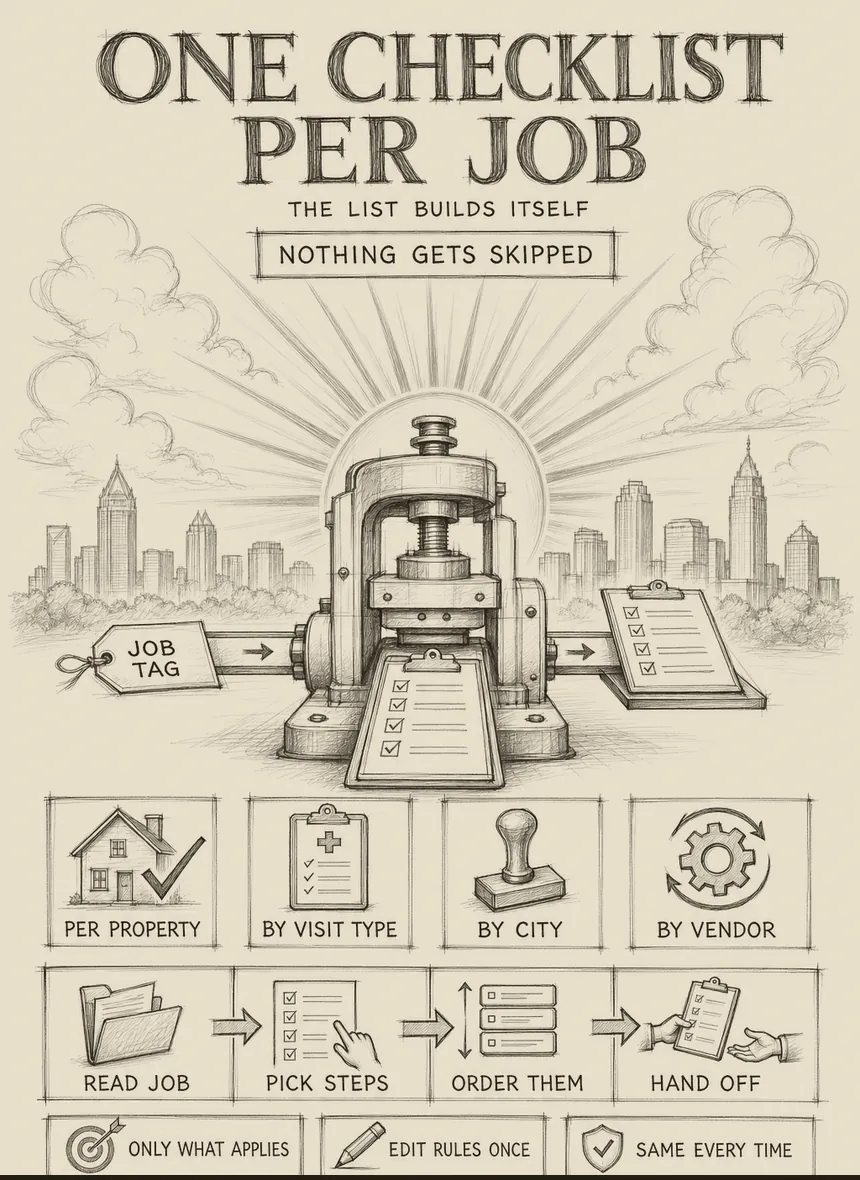
Most shops run one master checklist and reuse it for everything. It feels organized. The problem shows up in the gaps. Every job is a little different, so the generic list either includes steps that do not apply this time, or it is missing the ones that do. The person doing the work has to know which lines to skip and which to add. That knowledge usually lives in one experienced head, and the day that person is out, things get missed.
I built the other version of this on a project where the steps are not optional, compliance work, where a skipped step is a real problem. Instead of one static checklist, there is a single function that builds the exact checklist for that specific job, from scratch, every time. It looks at the facts (who the customer is, which service, which state, which vendor) and assembles only the steps that actually apply, in the right order. Change the vendor, you get a different list. Same backbone, correct every time.
Here is why that matters for a normal business.
- A cleaning company generates a per-property checklist. The three-story with the dog and the alarm code gets different steps than the studio downtown. The new hire sees the right list on day one.
- A clinic builds intake by visit type. A new-patient physical pulls different forms and steps than a five-minute follow-up. Front desk never guesses.
- A contractor gets permit and inspection steps by city. Charlotte, Concord, and Mint Hill each want something different, and the list already knows.
The payoff is consistency without a giant binder nobody reads. Nothing gets skipped because the list only ever shows what applies. New people do the job right immediately, because the process is in the system instead of in one person's memory. You edit the rules once, in one place, and every future job builds itself correctly instead of somebody copy-pasting last month's template and hoping it was updated.
You do not need my exact setup. You need to stop maintaining one checklist for jobs that are not the same, and start letting the facts of each job build its own. A checklist builder that works this way is on this workbench's build list.
From a compliance-grade checklist engine. Everything described here is something I actually run; nothing on this bench is theoretical.